The Bunk room

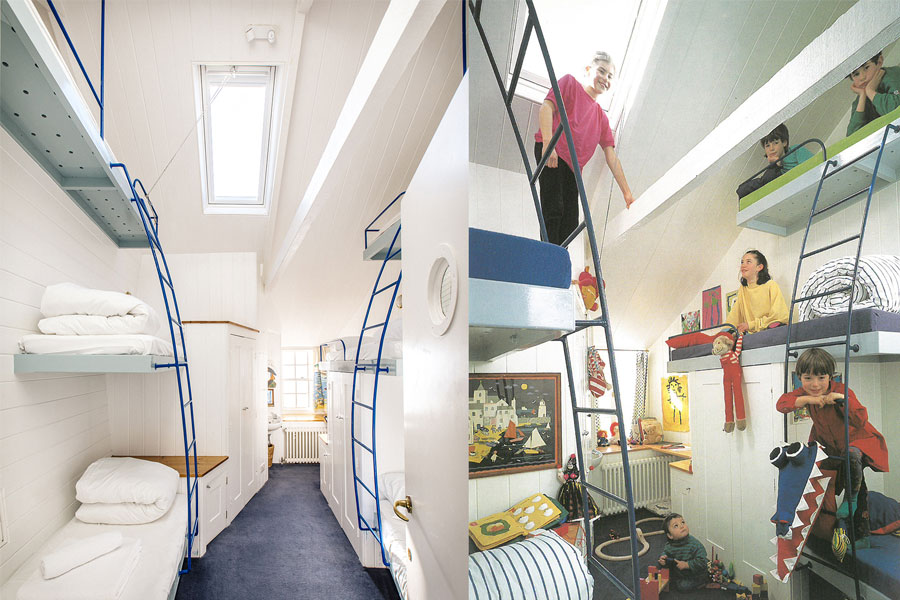
The brief for Upper Saltings, back in 1992, was to create a holiday apartment for a large extended family with, at that time, four grandchildren and more on the way. We already knew that we wanted to make the living room at the beach end of the apartment as large as possible, so the four bedrooms and two bathrooms needed to be squeezed. They needed to be comfortable but without an inch wasted, and they needed to sleep as many people as possible. It was easy to fashion three comfortable double rooms, a generous family bathroom and an ensuite shower room. What wasn’t so clear was what to do with a narrow gloomy space sandwiched between two of the bedrooms, with barely enough space for a single bed. And so far we only had beds for six. How to fit everyone in?
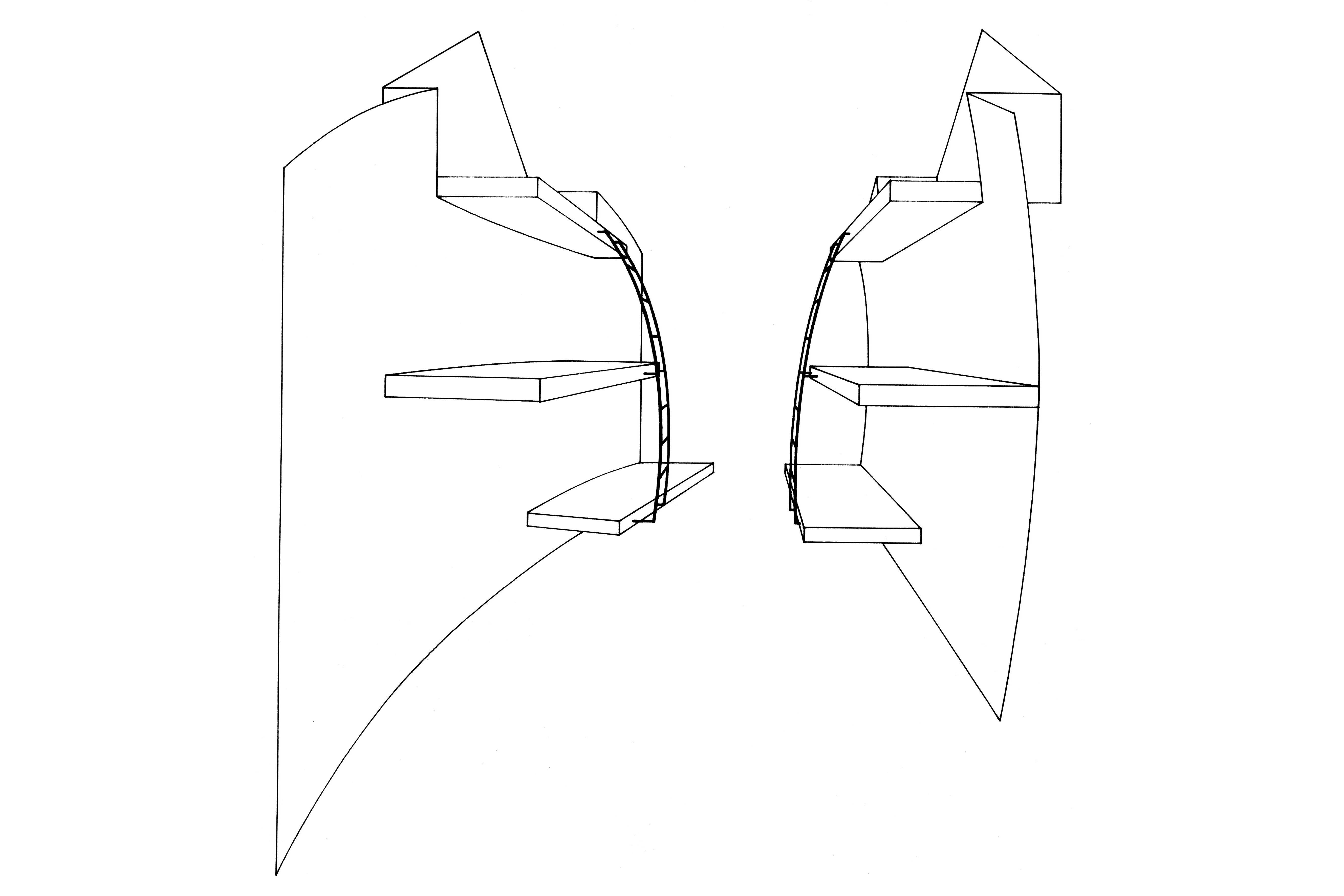
We had recently been travelling in the US, and had admired an exhibit of a typical nineteenth century ship’s cabin at the Brooklyn Museum. We liked how it fitted berths, cupboards and table into the smallest possible space. Most of all we liked the way one of the walls bellied out to make most space where it is needed, between hip and shoulder level, the belly following the notional curve of the ship’s hull.
What we did at Upper Saltings was create two bellied walls facing each other, one curving in a horizontal plane, the other vertically. This neatly fitted the available shape of the room, with almost no wasted space. And because this was not a ship – above the ceiling of the room was a roof space - we took the ceiling out and found that we could extend the Bunkroom over the top of the rooms to either side, giving us valuable extra inches.
Most bunkrooms are not much fun, the bunks stacked one above the other with minimum space in-between. We did it differently. We installed six bunks, three to a side, with the top bunks push back into the roof shape over the rooms to either side. We staggered the position of each bed, so there was as much space as possible above the head end of each, and made sure each bed had a shelf for books and a bulkhead light. The upper births are accessed by means of curved metal ladders
We added a skylight, two big cupboards for hanging and suitcases, a desk and a children’s height washbasin, plus six clothes drawers, one per bed, under the lowest bunks. The tongue and groove boarding continues the ship’s cabin feel. It runs horizontally on one wall, vertically on the other, and we continued it on the ceiling slopes. In keeping with the nautical theme, the colour scheme is white and blue. Set into the door is a small porthole, invaluable for keeping an eye on wideawake children after lights out.
So we solved our accommodation problem with six extra full-size beds in a space where there had been just one before, and made a room which children (and grown ups) love. What we hadn’t anticipated was that as well as sleeping there, children would enjoy it as a playroom, for playing houses, pirate ships and everything in between.
Read what our guests are saying about Saltings on Porthmeor



